
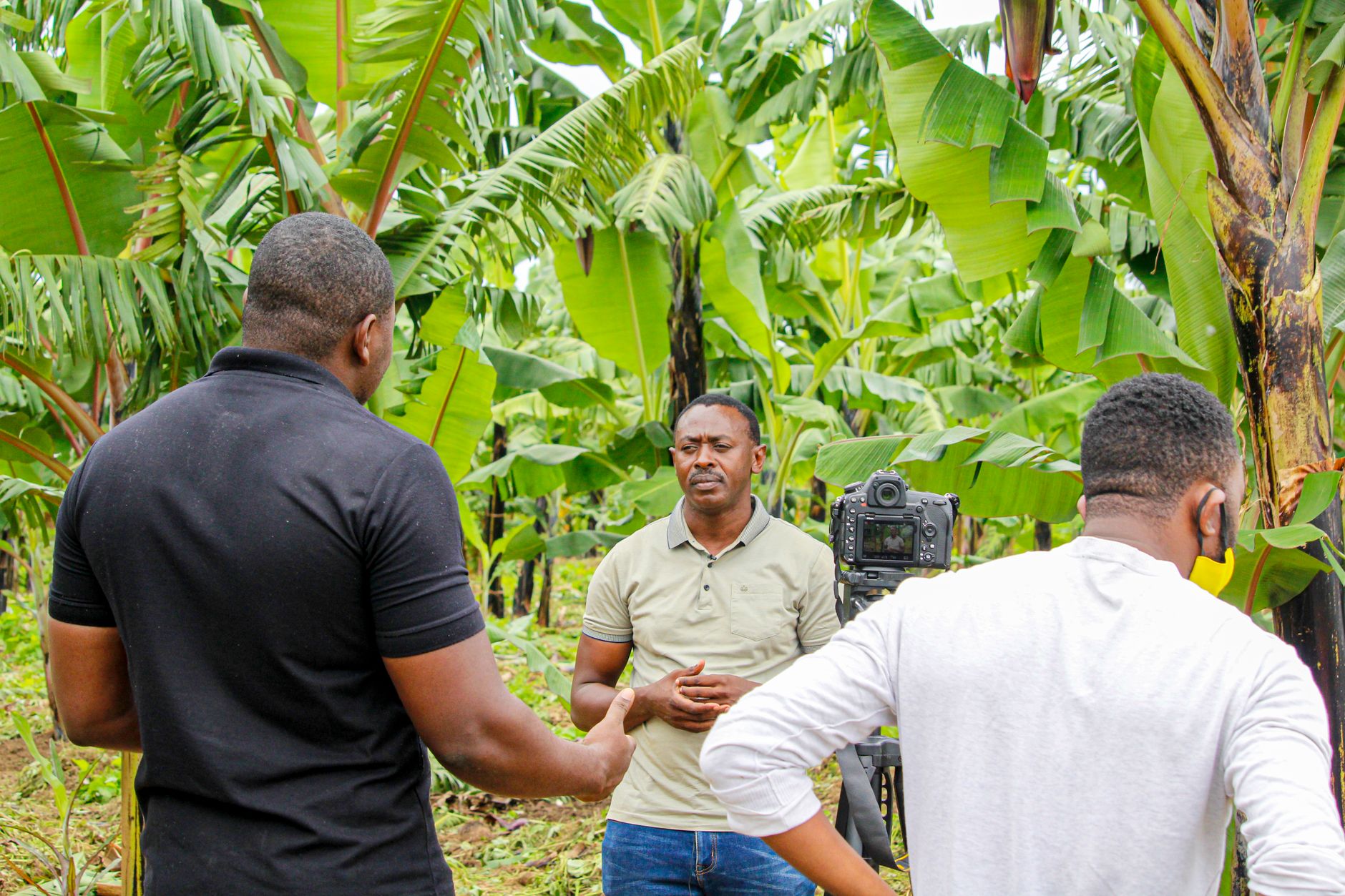
A persistent myth in development communications is that content begins and ends with the simple ability to figure out what to write. Give the communications officer a program report, a few photographs, and a deadline, and somehow a story, social media post, newsletter, or press release is expected to emerge.
This is not content strategy. It’s the curation of narratives, planning, coordination, production, management, distribution, and measurement of hw how you turned information into something an audience can understand, connect to, and act on.
For nonprofits, development agencies and similar organisations, this distinction matters because there’s no shortage of information in the sector. Programme teams produce assessments, reports, research, data, success stories, policy briefs, training materials, and monitoring reports every day. The problem is often not a lack of content; rather, it’s that the right message is not framed in context and is not always packaged, managed, or distributed effectively.
Often there’s little time and resources to develop a proper strategy. So what next? Let’s walk through the content strategy, planning and management maze.
Start with the audience, not the document.
Good content starts with a deceptively simple question: Who needs to know this, and why?
An NGO may have one project but several audiences with very different needs. The donor wants evidence of results and value for money. A government partner needs policy-relevant findings. The community wants practical information in a familiar language. A curious journalist may need to illustrate a compelling human story based on credible data. A prospective partner may want to understand the organisation’s expertise. Meanwhile, senior management needs concise briefings that can be used in a meeting.
The underlying information may be the same, but the content should not necessarily be.
This is why audience segmentation is so important. Understanding audiences’ information needs allows you to select appropriate channels and develop messages that reflect the realities, motivations and barriers of the people being reached.
The communicator’s job, therefore, goes beyond “write up the report” to transforming program information into formats that make sense to different audiences and at different key moments.
Content is a lifecycle, not a deliverable.
One of the biggest mistakes we make is treating content as something that is finished once it has been published.
A better way to think about it is as a lifecycle where you plan, gather, create, review, approve, publish, distribute, monitor, update, repurpose, and eventually retire.
Consider a three-year agricultural project. It may generate dozens of technical reports, hundreds of photographs, beneficiary interviews, datasets, videos, training materials, events, and field updates. Without a system for managing this material, valuable information quickly becomes buried in email inboxes, shared drives, and someone’s laptop. Especially the evergreen assets.
A good content system creates order around this chaos.
It should be possible to answer basic questions such as: Where is the latest version of this report? Who approved these photographs? Which stories have already been published? What donor visibility requirements apply? Can this beneficiary story be repurposed? When was this webpage last updated? Do we have consent to use this image? Which program outcomes does this story demonstrate?
These are not writing questions. They are content questions.
The NGO communicator is often a translator.
The next complication: much of the source material is technical.
Programme specialists speak in terms of indicators, outputs, outcomes, resilience, value chains, policy frameworks, epidemiological data, climate adaptation, and theories of change. Communities, journalists, donors, and the general public do not necessarily speak the same language.
The communicator sits in the middle of this, translating technical knowledge without stripping away its meaning.
That requires more than good grammar. It requires the ability to understand complex work and sound editorial judgment.
Finding the story inside the information.
A 60-page evaluation report might contain one statistic that should become an infographic, a finding that deserves a feature story, a quote that belongs in a social media post, and a recommendation that should become a policy-focused article. The communicator needs to recognise those opportunities i the context of their target audience.
WHO’s communication principles offer a useful framework here, emphasising communication that is accessible, relevant, actionable, timely, credible, and understandable. It’s guidance applies across formats ranging from social media and fact sheets to feature stories, infographics, videos, and news releases.
One piece of information can have many lives.
Developing good content also means understanding that it does not have to be created from scratch every time.
A project report can become a web story. The web story can become a LinkedIn post. The key findings can become an infographic. A beneficiary interview can become a short video. The data can inform a media pitch. A quote from the project lead can become a social media card. Several stories can eventually become a donor-facing impact report.
This is particularly important for NGOs, where communications teams are frequently expected to support multiple projects, campaigns, donors, and platforms with limited resources.
The answer is not necessarily to produce more content. It is to get more value from the content you already have.
Candid’s guidance on nonprofit digital storytelling similarly treats storytelling as part of a broader digital ecosystem, spanning websites, social media, video, email, and other channels rather than existing as an isolated product.
Distribution is part of the job.
Publishing something on your website does not mean people will see it.
This sounds obvious, yet organisations routinely spend considerable time producing excellent reports and stories that receive little attention because distribution was treated as an afterthought. The content-channel-audience relationship is central to planning and should never be left to chance.
Some questions you should ask yourself: Should this story go on the website first? Is LinkedIn the right platform for the audience? Would a WhatsApp-ready video work better for community partners? Should the findings be pitched to journalists? Does the donor have its own communications channels? Could a partner organisation amplify the story better? Is there a relevant campaign or international observance around which the content can be positioned?
Distribution should be considered when the content is planned, not after the final draft has been approved.
SEO still matters, but GEO and AEO is playing the game and taking names.
Search engine optimisation remains part of effective content management. Titles, headings, metadata, internal links, image descriptions, and the structure of web content can all help audiences find information. But the regular use of generative AI has made the quality question even more important.
It is now remarkably easy to produce 10 blog posts, 20 social media captions, or a dozen variations of a project description before lunch. That does not mean anyone needs those 42 pieces of content. Or that they’re particularly informative. At the same time, your keyword strategy must also consider optimising for AI bots if you want your content found.
Generative Engine Optimisation (GEO) and Answer Engine Optimisation (AEO) must be part of your SEO strategy
Google’s guidance stresses original, useful, people-first content and warns against producing large volumes of low-value material simply to attract search traffic. Its newer guidance for generative AI search similarly emphasises unique perspectives, firsthand expertise, and content that adds something beyond what an AI system could easily reproduce.
For NGOs, this creates an interesting opportunity, because they have something AI cannot manufacture on its own, which is first-hand access to people, places, programs, evidence, and expertise.
A communicator who has spent three days in a pastoralist community, interviewed farmers participating in a climate adaptation program, or sat with a project team analysing field data has access to source material that is inherently more valuable than another generic article about ‘the importance of climate resilience’.
AI is a tool, not a content strategy.
And this brings us to the elephant in the communications room. Generative AI can help with research, brainstorming, transcription, translation, summarization, editing, and repurposing. Used properly, it can remove some of the more tedious parts of content production.
But AI cannot replace the framing and editorial responsibility of deciding what deserves to be communicated, whether a claim is accurate, whether a person’s story has been represented fairly or whether a piece of content is appropriate for a particular audience.
For NGOs, this is particularly important because communications frequently involve vulnerable people, sensitive subjects, and claims about program impact.
Google itself advises that AI-assisted content should still meet standards for accuracy, quality, and relevance and notes that organisations should provide context about how AI was used where that information would reasonably matter to audiences. AI can help you get from a blank page to a draft. It however, cannot give you program knowledge, ethical judgment, field experience, or institutional accountability.
The communicator therefore remains the gatekeeper.
Then there is the part nobody can put on the tweet or poster: governance.
Who owns the content? Who approves it? Which version is final? Who has sign-off authority? What branding requirements apply? Are donor logos being used correctly? Has a participant provided informed consent? Are there safeguarding considerations? Can photographs be reused? How long should content remain online?
Governance is the unglamorous part that keeps everything together.
For an organisation operating across multiple countries, programs, and funding arrangements, these questions become even more complicated. A good content operation therefore needs clear workflows, approval processes, naming conventions, content calendars, asset libraries, editorial guidelines, and, where necessary, legal and safeguarding checks.
This is, by far, the least glamorous and most incredibly tedious part of communications work. It is, however, what prevents a communications team from discovering at 4:57 p.m. that the photo stories scheduled for publication at 5.00 pm have no confirmed consent form.
Measure what matters.
Finally, content management does not end with publication.
Analytics provide an opportunity to learn what audiences actually do rather than relying entirely on assumptions. Website traffic, search queries, engagement, video completion, downloads, newsletter behavior, referrals, and other indicators can reveal which content is reaching the intended audience and which content is simply sitting there looking important.
Measurement should connect back to purpose.
A 10,000-view video is not automatically more successful than a 500-view policy brief if the policy brief reached the 20 people who needed to influence a decision.
For NGOs, content measurement should therefore go beyond vanity metrics and ask whether content contributed to awareness, engagement, behaviour change, advocacy, fundraising, partnership building, knowledge sharing, or program objectives.
In conclusion, when properly mapped, the maze of content strategy, planning and management finally melds into a well-oiled engine that knows your audiences and understands your programs, helps you find the story in a technical report. Gives you analytics to decide which channel makes sense. Manages your multimedia assets, websites, repurposing good material. And increasingly, it helps you know when not to create another piece of content.
Creating content in itself may be one of the most creatively demanding things a communicator does throughout their career. There is rarely a one-size-fits-all formula because audiences, platforms, technology, and the ways people consume information are constantly changing.
The answer is to build smarter systems around content and make the information work for you.